

So you're trying to pick the right supplier from China Label Feeder Manufacturers? It's not just about lining up catalog prices. Global buyers really need to dig into feeding accuracy, material compatibility, line speed, how fast the service team responds, and proof of actual production experience. A feeder can look great under showroom lights and still act completely different once it's sitting next to a fast label applicator.
In this guide, we're looking at ten manufacturers that serve international packaging and labeling markets. The comparison looks at product design, customization options, quality control, delivery communication, and after-sales support. Names like Leadworld, Keshenglong, New Star Machinery, and LabelOn Machinery each show a different way of approaching manufacturing. Some go for compact systems. Others build integrated feeding units for high-volume production.
Label-industry consultant Mike Fairley puts it simply: “Reliable label production begins with controlled material movement.” That hits home when thin paper labels curl, adhesive stock shifts, or rolls show up with uneven tension. One tiny alignment error can turn into visible gaps after thousands of applications—and then costly rework.
Now, this selection isn’t perfect. Public supplier info changes, and factory claims? They deserve a second look. Buyers should ask for current test videos, sample runs, electrical specs, and references from similar users. Factory audits still matter. So does asking those awkward questions about spare parts and response times.
Real performance matters.
This intro is meant to help readers compare China Label Feeder Manufacturers from a buyer’s point of view. The strongest supplier isn’t always the biggest. It’s the one that matches feeder stability, technical support, budget, and operating conditions—with measurable evidence.

What Label Feeders Are and Why Global Buyers Need Them
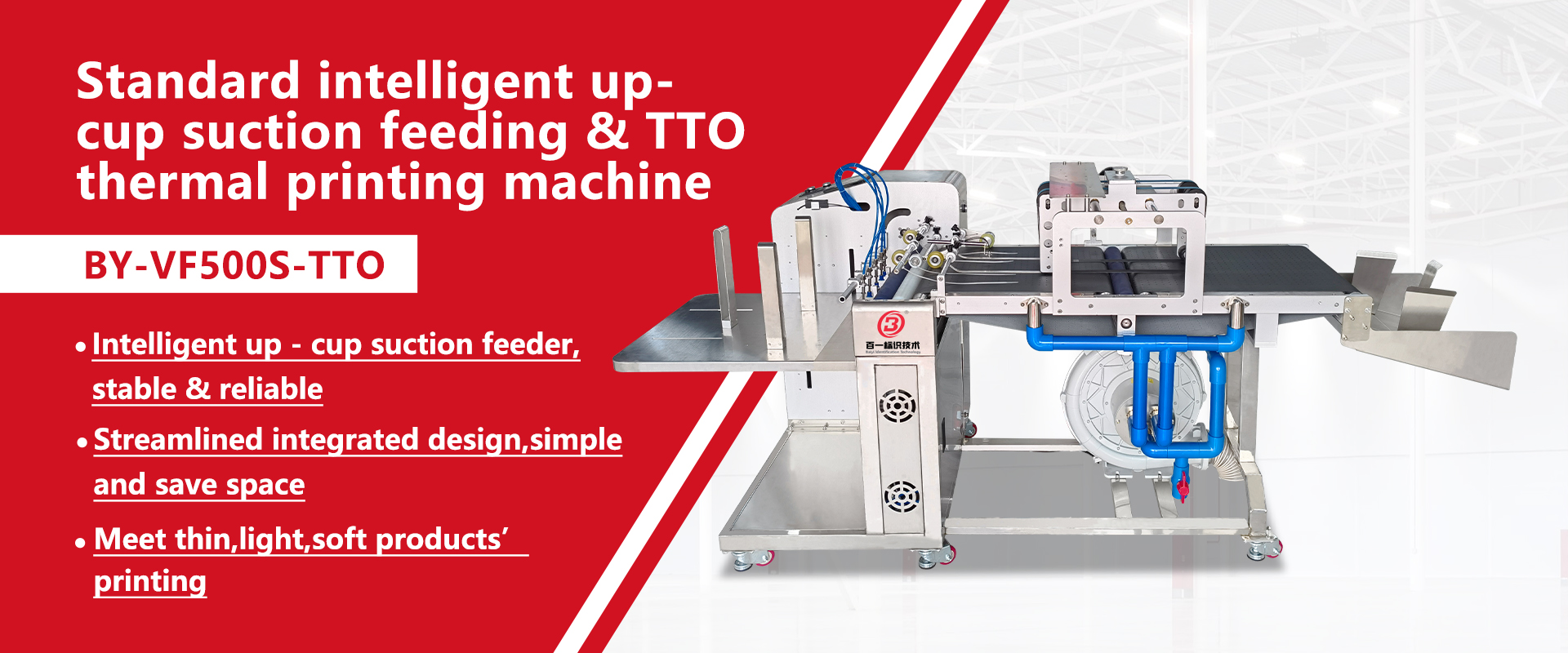
A label feeder is a mechanical unit that separates, aligns, and delivers labels into a packaging or printing line. It handles rolls, stacks, or fan-folded materials with controlled speed. In practice, it prevents crooked placement, double feeding, and costly line stops.
Global buyers need feeders because packaging lines are becoming faster and more varied. Grand View Research reported that the global labels market was valued at about USD 49.1 billion in 2022. It also projected a 5.9% annual growth rate from 2023 to 2030. Smithers has highlighted stronger demand for short runs, variable data, and sustainable label materials. These changes require accurate feeding across different sizes, adhesives, and substrates. A feeder that works well on paper may struggle with thin film. The calculation is not perfect. Real production conditions can be messier.
Tips: Test the feeder with your actual label stock. Check speed, waste, sensor response, and changeover time. Ask for recorded performance data, not only catalog claims. Inspect rollers and guides during a factory trial. Small alignment errors become expensive after thousands of packs. Also check local service coverage and spare-part availability. Reliable support often matters more than peak speed.
China Top 10 Label Feeder Manufacturers for Global Buyers - What Label Feeders Are and Why Global Buyers Need Them
A label feeder is a machine module that separates labels from a liner or roll, controls label position, and delivers each label to a product, package, conveyor, or downstream applicator. The table below compares ten common label-feeder capability profiles used by global buyers. The specifications are representative market ranges rather than data from any named company or brand.
| Profile | Typical Feeder Configuration | Suitable Label Format | Typical Label Width | Typical Operating Speed | Positioning Accuracy | Common Label Materials | Typical Applications | Key Buyer Advantages | Important Purchasing Checks |
|---|---|---|---|---|---|---|---|---|---|
| 1 | Standard Roll-Fed Linear Feeder | Pressure-sensitive labels on a continuous liner | 20–150 mm | 30–120 labels/min | Usually within ±1.0 mm | Paper, PE, PP, PET | Cartons, bottles, jars, pouches | Simple integration, broad compatibility, and economical operation | Core diameter, maximum roll diameter, liner thickness, and mounting direction |
| 2 | High-Speed Servo Feeder | Roll-fed labels requiring synchronized dispensing | 20–200 mm | 100–300 labels/min | Usually within ±0.5 mm | Paper, synthetic film, laminated labels | High-volume beverage, personal-care, and consumer-goods lines | Stable pitch control and improved repeatability at higher speeds | Servo torque, acceleration profile, web tension, and communication protocol |
| 3 | Print-and-Dispense Feeder | Blank or variable-data labels printed immediately before application | 25–110 mm | 20–100 labels/min | Usually within ±1.0 mm | Direct-thermal paper, thermal-transfer paper, synthetic media | Shipping labels, batch coding, warehouse identification, compliance labels | Supports variable information, barcodes, serialization, and traceability | Printer interface, print resolution, barcode quality, and data-system compatibility |
| 4 | High-Tack Adhesive Label Feeder | Labels with strong adhesive or difficult release characteristics | 20–160 mm | 30–150 labels/min | Usually within ±0.8 mm | Gloss paper, coated film, PE, PP, PET | Industrial parts, chemical containers, outdoor products | Better control of adhesive build-up and label release | Peel-plate geometry, liner release force, cleaning access, and roller material |
| 5 | Small-Label Precision Feeder | Small labels, seals, tamper indicators, and narrow identification labels | 8–50 mm | 40–180 labels/min | Usually within ±0.5 mm | Paper, PET, PP, security film | Electronics, cosmetics, medical packaging, small containers | Accurate dispensing for short labels and small product surfaces | Minimum label length, sensor resolution, edge tracking, and web stability |
| 6 | Wide-Web Heavy-Duty Feeder | Large-format labels and reinforced industrial labels | 100–300 mm | 20–90 labels/min | Usually within ±1.5 mm | Heavy paper, PET, PP, laminated film | Large cartons, drums, pallets, appliances, industrial equipment | Handles wider webs and heavier rolls with stronger tension control | Maximum web width, roll weight, shaft capacity, frame rigidity, and motor torque |
| 7 | Wrap-Around Container Feeder | Long labels intended to wrap around cylindrical products | 30–180 mm | 30–140 labels/min | Usually within ±1.0 mm | Paper, BOPP, PE, PP, laminated film | Bottles, cans, tubes, jars, and round containers | Supports controlled label hand-off to wrap belts or rotary applicators | Product diameter range, conveyor speed, label overlap requirement, and wrap-belt layout |
| 8 | Tamper-Evident Seal Feeder | Folded, perforated, or security seal labels | 15–100 mm | 20–100 labels/min | Usually within ±1.0 mm | Paper, PET, PP, destructible film | Food packaging, pharmaceutical cartons, cosmetics, security closures | Enables repeatable placement of seals across lids, flaps, or openings | Perforation strength, folding behavior, adhesive performance, and inspection requirements |
| 9 | Multi-Lane Label Feeder | Multiple label webs or parallel product lanes | 10–100 mm per lane | 40–240 total labels/min | Usually within ±1.0 mm | Paper, PE, PP, PET | Multi-lane filling, pharmaceutical packs, promotional multipacks | Increases throughput while using one coordinated control system | Lane spacing, independent tension control, sensor synchronization, and changeover time |
| 10 | Modular Custom-Integration Feeder | Special shapes, non-standard liners, or customized label delivery | 10–250 mm | Application-dependent, commonly 20–180 labels/min | Typically ±0.5–1.5 mm | Paper, film, foil, specialty laminates | Robotic cells, vision-inspected lines, custom packaging equipment | Flexible mechanical layout and compatibility with bespoke automation systems | Machine interface, safety circuits, vision signals, PLC protocol, and acceptance testing |
Buyer note: Actual performance depends on label length, liner stiffness, adhesive type, roll quality, product geometry, environmental conditions, machine configuration, and operator setup. Global buyers should confirm sample testing, electrical standards, language support, spare parts availability, documentation, installation assistance, and after-sales service before placing an order.
Intelligent Feeding & Rewinding: A Smarter Color UV Printing System for Efficient Production
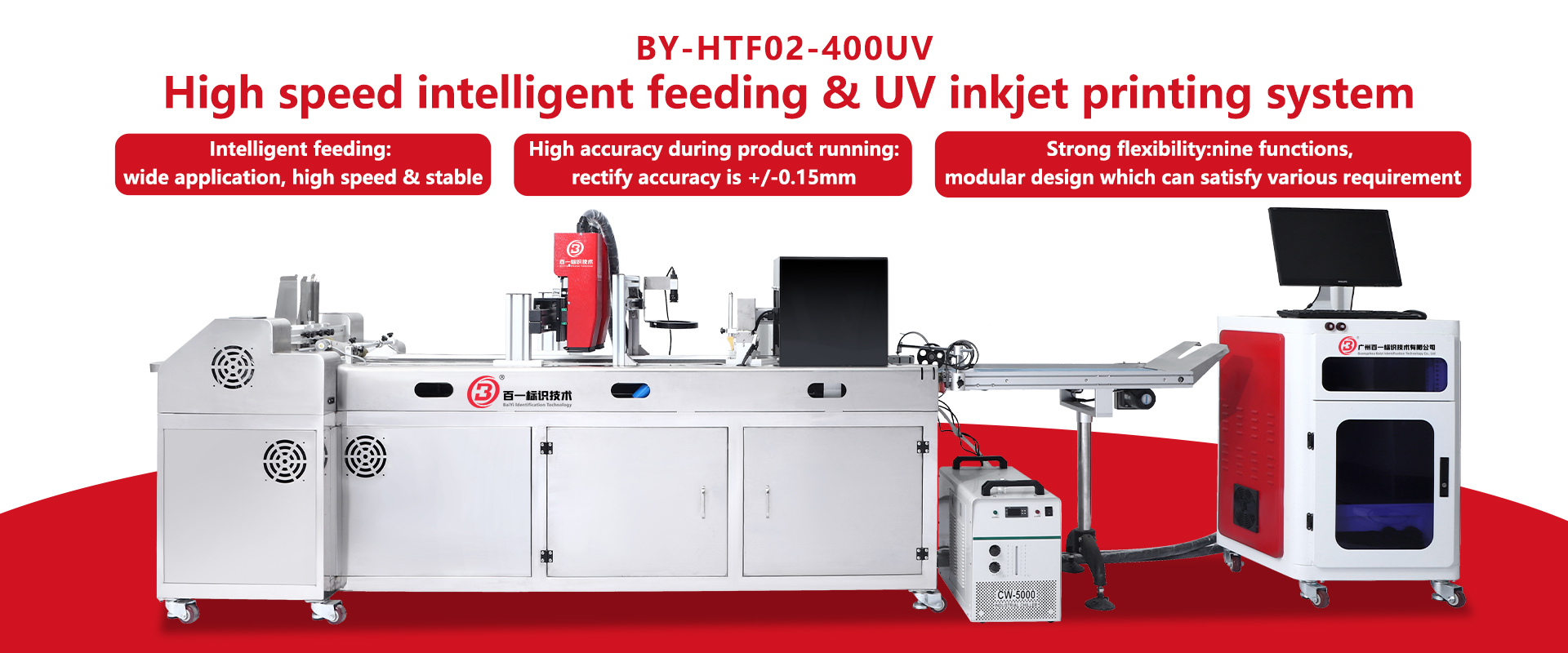
Intelligent Feeding & Rewinding Color UV Printing System combines automated material handling with full-color UV digital printing to create a more efficient workflow. Its compact structure, precise feeding process, and intelligent operation help maintain stable performance during continuous production. With one-touch startup and support for single-item output, the system reduces setup complexity and makes customized printing more convenient for both short runs and on-demand jobs.
The system produces sharp text, vivid images, serial numbers, logos, QR codes, and barcodes with excellent ink adhesion. UV-curable inks provide reliable results on a broad range of materials, including paper, plastics, wood, leather, metal, glass, and ceramics. Fast production, consistent color reproduction, simple operation, and low operating costs make it suitable for applications that require flexible customization and dependable output. Its intelligent feeding and rewinding functions also support smoother material handling, helping operators improve productivity while maintaining print quality.

FAQS
Confirm label width, liner thickness, roll diameter, core size, and roll weight. Check required feeding speed and electrical specifications. Ask for drawings and compatible interface details. Small details matter.
Product sheets cannot reveal every feeding problem. Use your own labels during continuous operation. Watch for skewing, early peeling, adhesive buildup, and uneven spacing. Short demonstrations can mislead.
Record results at slow, normal, and maximum speeds. Check sensor response and changeover time. Observe performance after several hours of operation. Heat and dust may expose weaknesses.
Ask whether the frame, speed, controls, and mounting positions can be adjusted. Request engineering drawings and tolerance data. A standard model may need unexpected changes. That is common.
Review machining equipment, assembly areas, spare-part storage, and final testing stations. Check whether inspection records are available. Photos alone provide limited evidence.
Speak with an engineer, not only a sales representative. Ask practical questions about integration, sensors, and emergency stops. Delayed or vague replies may predict service problems. I may be wrong sometimes.
Confirm warranty limits, response times, installation support, spare-part availability, and documentation quality. Check support across different time zones. Written terms are safer than verbal promises.
Not necessarily. Compare installation, training, maintenance, adjustments, and replacement parts. Expensive equipment is not automatically better. Total ownership cost matters more than the opening price.
Use a pilot order and written acceptance criteria. Arrange a video-based factory inspection when travel is difficult. Record feeding accuracy and interface requirements clearly. No checklist catches everything.
Conclusion
This article provides a practical guide to China Label Feeder Manufacturers for global buyers seeking reliable solutions for automated labeling processes. It explains what label feeders are, how they improve feeding accuracy and production efficiency, and why they are widely used in packaging and manufacturing operations. Readers will also learn how to evaluate suppliers by examining product quality, technical expertise, customization capabilities, production capacity, and overall manufacturing consistency.
The guide reviews key technologies used in modern label feeding systems, including precision control, sensor integration, adjustable feeding speeds, and compatibility with different label materials and production lines. It also compares supplier capabilities in product range, engineering support, export experience, quality standards, delivery coordination, and after-sales service. Finally, it offers a structured approach to selecting the right supplier by matching equipment performance, customization needs, budget, compliance expectations, and long-term support with the buyer’s specific operational requirements.
Related Posts
-

Why Choose China Supply Label Feeder Manufacturers?
-

What is the Role of China High Quality Label Feeder Manufacturers in Industry?
-

Why Choose the Best Supply China Label Feeder Manufacturers?
-

Top 5 China High Quality Label Feeder Manufacturers for Buyers?
-

2026 How to Choose the Best High Quality Label Feeders from China?
-

7 Tips for Choosing China Supply Label Feeder Manufacturers


