
0%

So, China has turned into a major production hub for continuous inkjet printing equipment. That means global buyers now have a lot of options—everything from long-established factories to newer tech-focused companies. This guide looks at some of the leading CIJ printer manufacturers, but through practical buying criteria rather than marketing hype.

Industry expert Dr. Dieter Leibinger once put it well: “Reliable coding begins with reliable engineering.” And honestly, that matters a lot on busy packaging lines. A printer might mark thousands of bottles a day, often while dealing with heat, dust, vibration, and fast-moving conveyors. Good manufacturers should offer stable ink systems, software that’s easy to understand, responsive tech support, and replacement parts you can actually get. Their machines also need to keep print quality consistent across plastics, glass, metal, cartons, and flexible packaging.

In this comparison, we’ll look at manufacturing experience, export capability, product design, maintenance access, and customer feedback. We’ll also check demos, warranty terms, training, and how quickly service teams respond. Those details often tell you more than a glossy brochure. No ranking is perfect, of course. Supplier capabilities can shift, and public information may be incomplete. That gap is worth paying attention to.

Buyers should ask for sample codes, production-line tests, fluid compatibility data, and realistic operating costs. A cheap purchase price can get expensive fast if cleaning takes longer or spare parts show up slowly. Experienced procurement teams know to evaluate total ownership costs, not just the machine’s listed price. Reliable CIJ printer manufacturers usually explain their limitations openly. They don’t pretend every environment will give identical results. This guide is meant to help global buyers compare evidence, ask sharper questions, and choose equipment that fits their actual production conditions.

Top China CIJ Printer Manufacturers for Global Buyers?

What Is a Continuous Inkjet Printer and Why Does It Matter?

A continuous inkjet printer, or CIJ printer, marks products while they move along a production line. It creates tiny ink droplets, charges selected droplets, and directs them toward the surface. Unused droplets return through the gutter for reuse. This process supports fast coding on bottles, cables, cartons, metal parts, and uneven packaging.

In a factory trial, the important details appear quickly. A clear code should remain readable after rubbing, moisture, or brief handling. The printer must also keep pace when a conveyor accelerates. Operators should check nozzle access, ink consumption, cleaning time, and alarm visibility. Small design choices matter. A poorly placed display can slow routine adjustments.

For global buyers comparing Chinese CIJ printer manufacturers, technical evidence matters more than attractive specifications. Request sample codes on your actual materials and test them under real line conditions. Ask for documented speed ranges, printhead protection, software language options, spare-part availability, and operator training. Safety data for inks and fluids should be provided clearly. Compliance requirements may differ by destination, so local verification remains necessary. A low purchase price can become expensive when maintenance support is weak. That risk is easy to underestimate. Even reliable equipment may need calibration after long storage or difficult temperature changes. Production teams should record these limits before approval.

How to Evaluate China-Based CIJ Printer Manufacturers

How to Evaluate China-Based CIJ Printer Manufacturers

China-based CIJ printer manufacturers deserve evaluation beyond catalog prices. MarketsandMarkets estimates the continuous inkjet printer market will reach about USD 1.5 billion by 2028, showing strong global demand. Growth also increases supplier differences. Ask for production records, component traceability, and documented quality procedures. ISO 9001 is a useful screening signal. The ISO Survey 2023 recorded 1,265,216 ISO 9001 certificates worldwide, but certification alone proves little. Verify the certificate scope and audit status.

Test the printer on your real products, not only smooth samples. Use actual line speed, substrate texture, humidity, and print height. Check character clarity after conveyor vibration and cleaning cycles. Measure startup time, ink consumption, solvent use, and unplanned stops. Small details matter. Request a written acceptance report.

Practical sourcing experience shows that service capacity often decides long-term value. Examine spare-parts inventory, remote diagnostic procedures, technician response times, and training materials. Ask whether software supports your language and production data requirements. Review electrical and safety documentation for your destination market, including applicable conformity requirements. A factory tour can look impressive. It is not proof of reliability. I would also request customer references from similar industries, while recognizing that references may be carefully selected. Compare total ownership cost over three years, not just the initial quotation. Sodium-level claims? Question them. Suppliers should explain test methods, limitations, and failure handling clearly.

Top China CIJ Printer Manufacturers for Global Buyers? - How to Evaluate China-Based CIJ Printer Manufacturers

Evaluation Dimension Recommended Assessment Criteria Evidence to Request Suggested Weight Buyer Evaluation Notes
Product Fit Suitability for porous and non-porous substrates, including metal, plastic, glass, cable, carton, and food packaging applications. Sample print tests using the buyer’s actual materials, line speed, message format, and production conditions. 15% Do not approve a printer based only on brochures; validate print adhesion, contrast, legibility, and drying performance.
Print Quality and Stability Consistent character formation, accurate registration, stable droplet charging, and reliable performance during continuous operation. Extended production trial, sample codes, defect records, and results at the required operating speed. 15% Evaluate the number of unreadable codes, nozzle-related interruptions, and quality changes over time.
Ink and Fluid Compatibility Availability of suitable standard, high-contrast, food-contact-compliant where applicable, UV-readable, and specialty inks. Safety Data Sheets, technical data sheets, regulatory declarations, compatibility guidance, and shelf-life information. 10% Confirm that ink and makeup-fluid requirements match local regulations, substrate needs, ventilation, and waste-handling procedures.
Operating Cost Total cost of ownership rather than equipment price alone, including ink, makeup, filters, printhead parts, maintenance, and energy. Consumption estimate based on message height, print frequency, duty cycle, and annual operating hours. 15% Compare cost per printed code or per operating hour under identical production assumptions.
Machine Reliability Resistance to dust, humidity, vibration, temperature variation, and demanding factory environments. Environmental specifications, operating temperature and humidity ranges, maintenance records, and reference installations. 10% Check whether the enclosure, cooling design, fluid system, and printhead protection are appropriate for the production site.
Line Integration Compatibility with conveyors, sensors, encoders, PLC systems, rotary equipment, packaging machines, and production databases. Interface specifications, communication protocols, wiring diagrams, trigger requirements, and integration test results. 10% Verify synchronization at the maximum line speed and confirm the availability of suitable mounting and communication options.
User Interface and Software Ease of message creation, multilingual support, password control, barcode capability, data import, and error prevention. Live software demonstration, supported languages, user-permission settings, and sample database connection. 5% A clear interface can reduce operator training time and minimize incorrect-code incidents.
Quality Management Documented manufacturing controls, incoming inspection, calibration, final testing, and traceability of critical components. Quality certificates, inspection procedures, test reports, corrective-action records, and serial-number traceability. 8% Prefer suppliers able to provide controlled documentation rather than relying solely on verbal quality assurances.
Compliance and Documentation Conformity with the destination market’s electrical, electromagnetic compatibility, machinery, chemical, and labeling requirements. Declaration of conformity, applicable test reports, user manuals, electrical diagrams, installation instructions, and safety labels. 7% Documents should identify the actual model and configuration being purchased, not only a similar product series.
After-Sales Support Remote diagnostics, installation assistance, preventive-maintenance guidance, spare-parts support, and escalation procedures. Service-level agreement, response-time commitment, training plan, support channels, and local or regional service coverage. 10% Confirm support hours, language capability, remote-access procedures, and how urgent production stoppages are handled.
Spare Parts Availability Availability and lead time for filters, pumps, valves, printhead components, sensors, boards, and consumable fluid-system parts. Recommended spare-parts list, stock policy, replacement intervals, pricing validity, and shipping options. 5% A low purchase price may create higher downtime risk if critical parts are difficult to obtain.
Export Capability Experience with international shipping, export packaging, customs documentation, payment terms, and destination-country requirements. Commercial invoice template, packing list, shipping terms, warranty procedure, export references, and installation documentation. 5% Assess whether the supplier can manage the full international delivery process and provide consistent documentation.
Warranty and Commercial Terms Warranty duration, coverage exclusions, commissioning responsibilities, acceptance criteria, payment schedule, and remedies for nonconformity. Signed quotation, warranty terms, acceptance protocol, service conditions, and clearly defined responsibility matrix. 5% Ensure all critical promises are written into the purchase contract rather than left in informal messages.
Total Suggested Evaluation Weight 120% Use the weights as a screening framework and normalize them to 100% for the final supplier score.
Recommended scoring method: Rate each dimension from 1 to 5, multiply the rating by the selected weight, and require successful sample testing, documentation review, and after-sales verification before final approval.

Leading Chinese CIJ Printer Manufacturers for International Buyers

Chinese CIJ printer manufacturers are attracting international buyers through practical engineering and competitive production costs. MarketsandMarkets projects the industrial inkjet printer market to grow from about USD 9.7 billion in 2023 to USD 13.7 billion by 2028. CIJ technology remains important for bottles, cables, cartons, and metal parts. Chinese suppliers increasingly offer stainless-steel cabinets, multilingual interfaces, and remote diagnostics. Yet low price alone is a weak buying reason.

A capable supplier should provide test samples, ink compatibility data, and documented print-speed results. Ask for performance on curved surfaces, dusty lines, and high-humidity workshops. An experienced factory can explain nozzle cleaning intervals, solvent consumption, and spare-part availability. ISO 9001 certification supports process consistency, but it does not guarantee every machine performs equally. Check recent audit records. Request traceable serial numbers and a written service response time.

The Smithers report, The Future of Inkjet Printing to 2029, identifies packaging, coding, and variable-data printing as continuing growth areas. This supports demand for reliable Chinese CIJ equipment among global buyers. However, published forecasts are not field evidence. That distinction matters. Arrange a live production trial before ordering. A sample may look perfect for one hour, then fail after eight. Buyers should compare total ownership cost, not only the quotation. Some manufacturers still need stronger overseas training networks, and that weakness deserves honest attention.

Key Features and Technologies in Modern CIJ Printing Systems

Modern continuous inkjet (CIJ) printers support fast, reliable coding on bottles, cartons, cables, and metal parts. Their core technology keeps ink droplets moving through a charged field. This creates sharp, contactless marks on uneven surfaces. Current systems often include touchscreen controls, automatic viscosity adjustment, and sealed ink management. These features reduce setup time during busy production shifts.

From practical factory use, printhead stability matters as much as resolution. A clean gutter helps prevent ink splashes and coding errors. Many machines now monitor ink levels, nozzle conditions, and operating temperature in real time. Ethernet and cloud-ready connections can also support remote diagnostics. However, connectivity is not always useful in every workshop. Some sites need simpler controls and stronger offline operation. The best choice depends on line speed, material, humidity, and operator skill.

Tips: Test the printer with your actual ink, substrate, and production speed. Check character height, drying time, solvent use, and maintenance access. Ask for sample codes before purchasing. Keep spare filters and approved cleaning fluids nearby. Do not judge performance from a showroom demo alone. A system may look excellent there, but perform differently beside dust, vibration, or changing temperatures. Calibration records and service training also improve long-term reliability.

Comparing Prices, Quality, Compliance, and Export Support

Top China CIJ Printer Manufacturers for Global Buyers?

Price matters, but the cheapest continuous inkjet printer may create higher costs later. Smithers’ 2024 digital print outlook identifies packaging and variable-data production as strong growth areas. Buyers should compare ink consumption, printhead life, maintenance intervals, and spare-part prices. A reliable factory should provide test samples using your actual substrate, line speed, and code format. Quality is visible in a stable 2D code, clean characters, and consistent performance after long operation. Certification documents also need checking, not just displaying.

Compliance requires more than a familiar conformity logo. Request safety files, electrical test reports, chemical documentation, and a clear list of approved inks. Requirements vary by destination and application. The World Bank’s 2023 Logistics Performance Index highlights customs, tracking, and delivery reliability as key trade factors. Therefore, export support should include accurate shipping documents, remote commissioning, manuals in usable English, and response-time commitments. I would not treat fast replies as proof of technical competence. Ask for evidence.

Tips: Compare five-year ownership costs, not only purchase prices. Test code adhesion after rubbing and heat exposure. Confirm local voltage, plug type, warranty limits, and stocked spare parts. Keep a written acceptance checklist. Small omissions become expensive. A factory that explains limitations honestly may be safer than one promising perfect performance.

How to Select the Right China CIJ Printer Supplier

Choosing a China CIJ printer supplier requires more than comparing online prices. Start with your production conditions: line speed, print height, ink type, ambient temperature, and daily operating hours. A capable manufacturer should provide test printing with your actual materials, such as plastic caps, cartons, or metal parts. Inspect character sharpness, drying time, adhesion, and stability after several hours.

Ask for technical evidence, not only polished brochures. Check factory experience, quality-control procedures, component traceability, and relevant product certifications. Request a clear warranty, installation plan, training schedule, and response time for remote support.

Spare parts availability also matters; a low purchase price becomes expensive when a filter or pump causes long downtime. Some suppliers offer excellent communication before payment, but their after-sales service may feel slower. This deserves careful verification.

Tips: Send sample products before ordering. Ask for a recorded continuous-run test. Confirm ink consumption under your real settings. Request references from similar industries, while checking whether those references are recent. A practical supplier should explain maintenance in simple language and admit equipment limitations. If a quotation is unusually vague, pause and ask for a detailed specification sheet, service terms, and delivery inspection process. Small details often reveal how dependable the partnership will be.

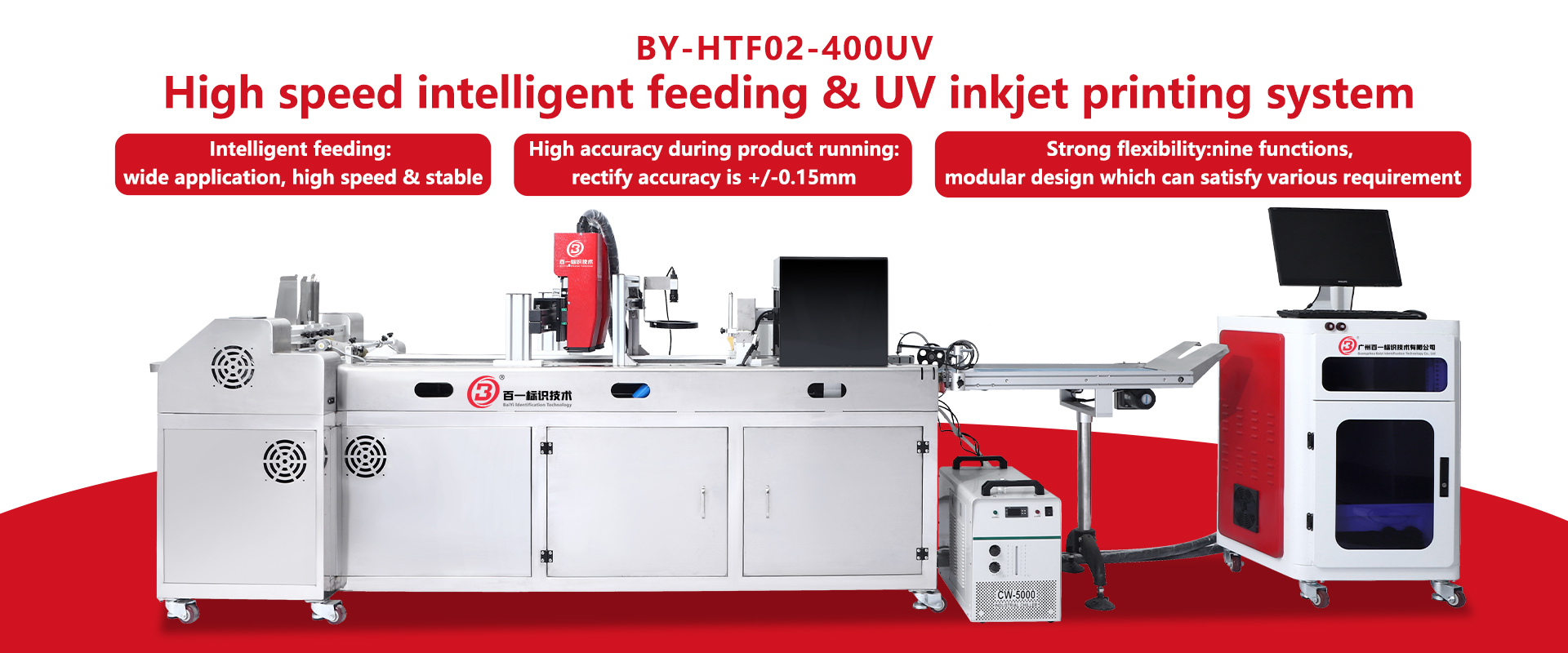
Intelligent Feeding & Rewinding: The Future of Color UV Printing Systems

Intelligent feeding and rewinding are becoming central to the future of color UV printing systems. As short-run and customized production continue to grow, manufacturers need equipment that can handle changing orders without lengthy setup. Smithers’ *The Future of Digital Print for Packaging to 2027* projects the digital packaging print market to reach approximately $28.9 billion by 2027, reflecting stronger demand for flexible, on-demand production. An intelligent feeding system helps maintain accurate material positioning, while coordinated rewinding supports smooth handling of continuous media and reduces waste during production changes.

Combining this technology with full-color UV digital printing creates a compact and practical solution for industrial applications. The system can produce sharp text, serial numbers, logos, images, QR codes, and barcodes on paper, plastics, wood, leather, metal, glass, and ceramics. UV curing delivers vibrant color and strong ink adhesion, while one-touch startup and single-item production simplify operation. Grand View Research has identified digital printing as a steadily expanding market, supported by personalization, rapid delivery requirements, and reduced setup costs. With precise feeding, stable rewinding, fast output, and low operating expenses, this system is well suited to small-batch manufacturing and customized printing where quality and efficiency must work together.

FAQS

What is a continuous inkjet printer?

It marks moving products without touching them. Tiny ink droplets form letters, numbers, or codes on the surface.

How does a continuous inkjet printer work?

The system charges selected droplets and guides them toward the product. Unused droplets return through a gutter for reuse.

Which materials can CIJ printers mark?

They can print on bottles, cables, cartons, metal parts, and uneven packaging. Test each material before approval.

Why is printhead stability important?

A stable printhead helps maintain clear codes during long production runs. A dirty gutter may cause splashes or missing characters.

What should buyers test before purchasing?

Test actual products, ink, line speed, and factory conditions. Check readability after rubbing, moisture, and brief handling.

Which supplier details deserve careful checking?

Request warranty terms, training plans, spare-part access, response times, and service procedures. Vague quotations need more questions.

Are advanced controls always better?

Not necessarily. Touchscreens and remote diagnostics can help, but some workshops need simple offline controls.

What maintenance supplies should operators keep nearby?

Keep approved cleaning fluids and spare filters available. Record calibration limits, cleaning time, and ink consumption.

Can a showroom demonstration prove performance?

No. Dust, vibration, humidity, and temperature changes may produce different results. A continuous-run test is more revealing.

What compliance information should buyers request?

Ask for clear safety data and product documentation. Destination requirements differ, so local verification remains necessary.

Conclusion

This guide explains what a Continuous Inkjet (CIJ) printer is and why it is important for reliable, high-speed product coding and marking. It outlines how international buyers can evaluate China-based Cij Printer Manufacturers by reviewing print quality, system stability, production capacity, technical expertise, certifications, customization options, and after-sales service. Readers will also learn how modern CIJ systems use advanced ink control, user-friendly interfaces, automatic cleaning functions, and efficient maintenance designs to support consistent performance in demanding industrial environments.

The article compares key purchasing factors, including price, quality, compliance, delivery capability, warranty terms, spare-parts availability, and export support. It also provides a practical framework for selecting the right supplier according to application requirements, production scale, budget, and long-term service expectations. By considering transparent communication, documented quality standards, responsive technical assistance, and proven international shipping experience, buyers can make a more confident and balanced decision when sourcing CIJ printing equipment from China.

Sophie

Sophie

Sophie is a dedicated marketing professional at Guangzhou Baiyi Identification Technology Co., Ltd., where she specializes in promoting cutting-edge solutions in the UV printing and inkjet printing sectors. With a profound understanding of the company’s core products, including advanced coding......
Previous Why Choose China Supply Label Feeder Manufacturers?