

Okay, so picking a CIJ printer manufacturer in 2026 isn't just about comparing prices or how fast it spits out codes. You've gotta find a partner who actually gets your production setup—like the surfaces you're printing on, the ink you need, and your maintenance routine. A solid printer should handle crisp codes on cartons, bottles, cables, or even flexible packaging without breaking a sweat. And it's gotta stay reliable even when things get rough—you know, heat, dust, vibration, or when your line speed decides to do its own thing. That's the real deal.
Okay, so here's the deal – don't just go by the glossy brochures. You've got to ask for a live sample, using your actual materials and your own ink. I mean, that's the only way to really see how it performs. Then, check the character quality after it dries, after you rub it, after it's been in a humid environment, or even just sitting on the shelf for a while. And don't be shy about asking the nitty-gritty questions: how often do you need to clean the printhead, how much solvent does it go through, when should you replace filters, and what happens if the thing just dies unexpectedly? A decent manufacturer should have all that info ready – like traceable test records, clear specs, they should train your people, and they should be quick to respond when you need help. That's what you want to look for. Honestly, it'd be refreshing if their engineers just came out and said, 'Here are the things we can't guarantee,' instead of promising everything will run smoothly. After all, no supplier is perfect—and that's okay, as long as they're real about it.
Look, when you're evaluating this, you really need to think about the total cost of ownership. Sure, that low upfront price might catch your eye, but it could easily be hiding expensive fluids, constant servicing headaches, or tech support that takes forever to get back to you. So don't just take their word for it – ask for references from similar factories, get the warranty terms in writing, and check if spare parts are actually available down the line. Plus, you'll want to make sure their software plays nice with what you're already using. And don't forget to verify they follow recognized quality standards and meet the product marking requirements for your market. Honestly, these things often matter way more than a fancy headline speed.
So, you're putting together a procurement shortlist, huh? It's easy to get swept up in the shiny presentations and slick demos, but what really matters is whether the tech, the reliability, the service, the compliance—all of it—actually holds up over the long haul. And hey, we should probably question some of the assumptions we've been making about automation and ROI, too. They're not always as straightforward as they seem. Here's the thing: your shortlist should come from solid evidence, not just whatever looks good on stage. Dig into your own production data—really look at it. Then pick a partner who can back up their claims when it's not a perfect demo environment, but the messy, real-world conditions where you actually operate. That's where the rubber meets the road.

Define Coding Needs: 1–5-Line Printing, 10 m/s, and 24/7 Duty Cycles
Choosing a CIJ printer manufacturer in 2026 starts with the production line, not a glossy specification sheet. Define the coding job precisely. Will the printer produce one line for date codes, or five lines for ingredients, batch data, and traceability? A ten-meter-per-second conveyor changes the decision. At that speed, ink drop placement, drying time, and printhead stability matter every second. Ask for a live trial using your actual substrate, line speed, and smallest required character.
A serious evaluation also covers 24/7 duty cycles. Request evidence from comparable factories, including uptime records, service intervals, and restart behavior after cleaning. Check how operators refill ink, clear alarms, and adjust message formats during a busy shift. Small delays become expensive.
The manufacturer should explain maintenance access, spare-part availability, training, and remote support in plain language. Do not accept “maintenance-free” claims without test conditions.
In practice, five-line coding can expose weaknesses hidden by simple date printing. Longer messages need stable fonts, consistent contrast, and dependable communication with production equipment. I have seen promising trials fail because ink dried slowly on a coated surface. That mistake is avoidable, but only when testing reflects real materials.
Test it live. A reliable supplier will document limitations, not hide them. Still, no evaluation is perfect. Plan a controlled pilot, measure rejects and downtime, and let operators challenge the proposed setup before purchase.
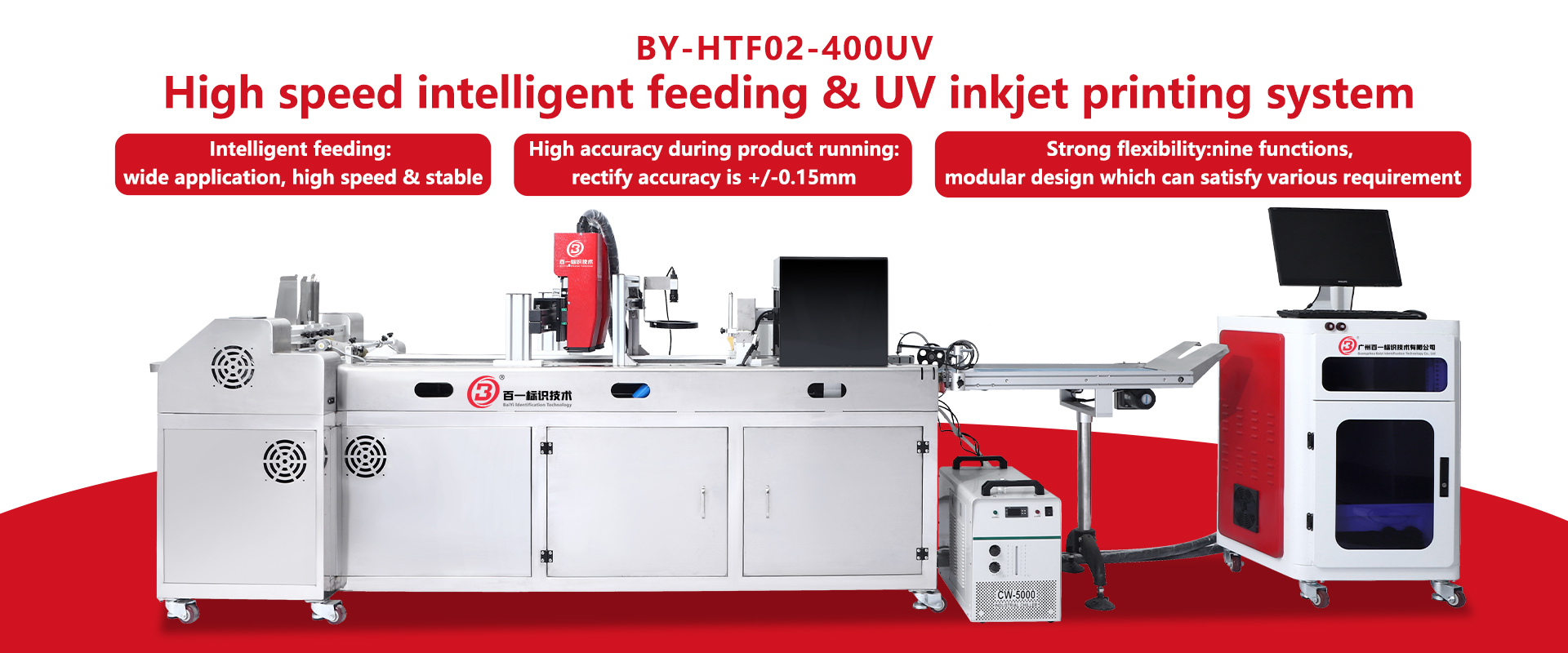
Intelligent Feeding & Rewinding Color UV Printing System: Smarter, Faster, More Efficient Printing Workflows
The Intelligent Feeding & Rewinding Color UV Printing System combines automated material handling with full-color UV digital printing to create a smarter and more efficient production workflow. Its compact structure, precise feeding control, and intelligent operation help reduce manual intervention while maintaining consistent printing accuracy. With one-touch startup and support for single-item production, the system is well suited to small-batch orders, customized products, and frequently changing print requirements.
Designed to handle a wide range of materials, including paper, plastics, wood, leather, metal, glass, and ceramics, the system can produce clear text, serial numbers, logos, images, QR codes, and barcodes. UV-curable ink delivers sharp details, vivid color reproduction, and strong adhesion across different surfaces. The integrated feeding and rewinding functions support smooth, continuous workflows, while stable performance and low operating costs improve overall production efficiency. Its simple operation and flexible capabilities make it suitable for industrial digital printing applications that require speed, precision, and reliable customization.

FAQS
Check the certificate’s scope, issuer, expiry date, and covered activities. It should include design, manufacturing, and service. A certificate alone proves little. Ask about ink-batch control, calibration records, complaints, and corrective actions.
A narrow scope may exclude printer design or after-sales service. That gap can affect real production support. Read the wording carefully. Do not rely on a wall display.
Request the complete test report, not only a brochure statement. Check dust exposure, water jets, cable glands, and access panels. Inspect connector gaps during a factory visit. Small gaps matter.
No. Installation, maintenance, and damaged seals can reduce protection. Dusty floors and loose cable fittings create practical weaknesses. Factory conditions are rarely perfect. I would inspect the actual enclosure.
Request the EU Declaration of Conformity and supporting technical documents. These should include risk assessments, test evidence, and user instructions. Check safety, electromagnetic compatibility, and environmental requirements. Model numbers must match everywhere.
Ask who updates compliance files after hardware or software changes. A vague answer suggests poor document management. That deserves attention. Record the responsible person and update process.
Request twelve months of service records from similar production environments. Check downtime codes, maintenance intervals, and actual running hours. Verify uptime after cleaning, ink changes, and operator checks. A polished percentage may hide missing context.
Ask whether MTBF includes printhead faults, pump failures, and planned maintenance. Laboratory conditions may produce unrealistic figures. Compare definitions carefully. High numbers can still mislead.
Review availability, performance, and quality separately. Compare electronic logs with invoices and shift reports. Quality records should include missed prints and rejected products. Data needs a paper trail.
Run a sample print trial and test support response times. Simulate nozzle blockage and power interruption recovery. Ask for customer references in similar climates and schedules. Call the support number. Delays matter. No checklist is perfect.
Conclusion
Choosing the right Cij Printer Manufacturer in 2026 requires a structured evaluation of technical performance, compliance, reliability, safety, and long-term cost. Start by defining your coding requirements, including one to five-line printing, speeds up to 10 m/s, and continuous 24/7 operation. Compare available 50–120 μm drop sizes to the character quality, resolution, and production speed your products require. Manufacturers should also be screened for ISO 9001 quality systems, suitable IEC 60529 IP protection ratings, and CE conformity.
Reliability should be supported by measurable evidence, such as MTBF, OEE, and documented uptime of at least 95%, rather than general claims. Confirm that inks and fluids meet applicable FDA 21 CFR and EU 1935/2004 requirements where relevant, with complete and accurate SDS documentation. Finally, assess total ownership cost by reviewing ink consumption, scheduled maintenance, spare parts, operator needs, and five-year service data. A balanced decision based on verified performance and transparent lifecycle costs will help ensure dependable coding and predictable production efficiency.
Related Posts
-

How to Choose a CIJ Printer Manufacturer?
-

How to Choose the Right Cij Printer Manufacturer for Your Needs?
-

What is the Best Supply China Label Feeder for Your Business?
-

Top Cij Inkjet Printer Manufacturers for Global Buyers?
-

Top 10 Tto Printer Manufacturers in China for Global Buyers?
-

China Top 10 Label Feeder Manufacturers for Global Buyers


