
Picking equipment that you can actually rely on takes a lot more than flipping through catalog photos or looking at the lowest headline price. This guide walks through ten Feeding Machine Series manufacturers in China that are worth a closer look, and it also looks at how their equipment tends to behave on real production floors. We’ll focus on feeder design, material compatibility, output stability, cleaning access, control systems, and after-sales support. Those things really matter when your line is running powders, granules, tablets, or awkward, irregular products.
Honestly, the practical details usually tell you more than glossy promo copy. A stainless steel hopper should stand up to corrosion and still be quick to clean. A steady screw or vibratory system should cut down on bridging, dust, and uneven discharge. PLC integration, sensor accuracy, and adjustable feeding speed also shape how efficient the line feels day to day. Before you commit, ask for test videos, factory documents, spare-parts lists, and references from similar plants. It’s the small stuff that adds up.
The manufacturers covered here are judged using publicly available info, technical specs, product range, manufacturing experience, and service capability. Where you can, verify certifications, production capacity, warranty terms, and installation support directly with each company. No ranking gets it perfect, either. A machine that works great in a food plant might struggle in chemical or pharmaceutical production. And sometimes local service response matters more than a lower purchase price.
This overview is meant to help you screen suppliers more carefully—not to replace factory trials or advice from a professional engineer. The best choice really comes down to material behavior, target throughput, available space, hygiene requirements, and the whole production line around it. So yes, Feeding Machine Series suppliers in China offer plenty of options, but choosing well still takes evidence, testing, and realistic expectations about how the equipment will run.
A feeding machine automatically moves materials from storage to the next production stage. It may handle powders, granules, tablets, liquids, or small components. In a factory, the machine replaces repetitive manual loading and keeps the production line supplied. The basic structure usually includes a hopper, feeding mechanism, motor, sensor, and control system. Small details matter.
During operation, material enters the hopper and moves through a screw, belt, vibratory tray, or pneumatic tube. A sensor detects the material level or container position. The controller then adjusts speed and feeding time. For example, a screw feeder can deliver powder at a controlled rate, while a vibratory feeder separates small parts before packaging. Operators should check flow stability, dust buildup, and unusual motor noise every shift.
From practical equipment evaluation, accuracy depends on more than the machine itself. Material moisture, particle size, and hopper design can change performance. A machine tested with dry granules may behave differently with sticky powder. That is an easy detail to miss. Reliable manufacturers normally provide test data, maintenance guidance, electrical specifications, and operator training. Buyers comparing China’s top feeding machine series manufacturers should also inspect calibration methods, emergency stops, spare-part support, and cleaning access. A polished demonstration is useful, but it cannot replace a long production trial.
Feeding machines control how materials enter a process, and the right type depends on product behavior. Vibratory bowl feeders handle small, rigid parts at steady speeds. They suit assembly lines for fasteners, electrical components, and molded pieces. Linear vibratory feeders move parts gently across short distances. This reduces orientation errors before packaging or inspection.
Screw feeders work well with powders, granules, and sticky materials. Food, chemical, and pharmaceutical plants often use them for measured transfer.
Belt feeders support larger volumes, especially in mining, aggregate, and recycling operations. Loss-in-weight feeders improve dosing accuracy by monitoring hopper weight continuously.
Pneumatic feeders can move lightweight materials through enclosed pipelines, but dust control needs careful attention.
Choosing equipment requires more than comparing rated capacity. Moisture, particle size, bulk density, and cleaning requirements can change performance. A feeder may deliver impressive output during a factory test, then struggle with humid material. That gap deserves attention. Operators should check calibration stability, access for maintenance, noise levels, and emergency controls. Short trials using real materials are more reliable than catalogue figures. Installation mistakes still happen, particularly with steep hopper angles and poor vibration isolation. Each machine series should match the process, not merely the purchasing budget.
China Top 10 Feeding Machine Series Manufacturers?
How to Evaluate China’s Feeding Machine Manufacturers
Evaluate feeding machine manufacturers through evidence, not catalog photographs. Ask for throughput data, feeding accuracy, material compatibility, and noise readings from comparable projects. A supplier should explain how the machine handles powder, granules, fragile parts, or irregular components. Request factory acceptance records and videos showing continuous operation. The International Federation of Robotics reported 276 industrial robots per 10,000 manufacturing employees in China in 2023. This indicates strong automation capacity, but robot density does not prove feeder quality.
Check engineering depth at the component level. Review motor brands, sensor specifications, control logic, cleaning access, and spare-part availability. Ask whether the feeding rate remains stable when humidity, particle size, or product shape changes. ISO 9001 certification can support process control, yet certification alone cannot verify field performance. Request at least three customer references in a similar industry, plus test results using your actual materials. The result may be less impressive than the brochure. That is useful.
Tips: Compare total ownership cost, not only the purchase price. Include installation, tooling changes, energy use, maintenance, training, and downtime. Require a written acceptance test with measurable limits. According to the International Federation of Robotics’ World Robotics 2024 report, global industrial robot installations exceeded 541,000 units in 2023. Manufacturers serving this automated environment should provide clear integration documents, communication protocols, and response times for technical support. Examine these details before ranking any feeding machine series.
How to Evaluate China’s Feeding Machine Manufacturers
This reference framework shows the typical weighting of ten criteria used when comparing industrial feeding machine suppliers. Throughput, dosing accuracy, material compatibility, and automation integration usually have the greatest influence on the final purchasing decision. The percentages represent evaluation priorities, not data from any specific company or brand.
China’s Top 10 Feeding Machine Series Manufacturers are often evaluated by engineering depth, production consistency, and after-sales support. A reliable shortlist should cover vibratory bowl feeders, screw feeders, belt feeders, vacuum feeders, and loss-in-weight systems. Each series serves different materials, speeds, and factory layouts. A dusty powder line needs different protection from a clean granule line.
The strongest manufacturers usually provide stainless-steel contact parts, adjustable feeding rates, overload protection, and programmable controls. They also test machines with the customer’s actual material. That detail matters. A feeder may handle dry pellets well but struggle with sticky powder. Look for measurable data, such as feed accuracy, hopper capacity, noise level, and continuous operating hours. Factory audits can reveal welding quality, spare-parts storage, and assembly discipline. Product videos alone are not enough.
No ranking is perfect. Some suppliers excel at custom automation but offer limited standard models. Others deliver fast, affordable equipment but provide weaker documentation. Buyers should compare drawings, trial reports, warranty terms, and installation support before choosing among China’s top ten feeding machine series manufacturers. Ask whether technicians can adjust sensors, motors, and controllers remotely. Check cleaning access too. Small design choices, such as hinged covers and tool-free clamps, can reduce production delays. Experience shows that the cheapest quotation is rarely the lowest total cost.
China Top 10 Feeding Machine Series Manufacturers: Core Technologies Used in Modern Feeding Systems
Modern feeding systems combine mechanical accuracy with responsive control. Leading Chinese manufacturers now develop vibratory, centrifugal, linear, and flexible feeding series for different production conditions. Servo drives regulate speed and stroke, while photoelectric sensors confirm part presence. A practical setup can detect an empty track before the next station stops. Small details matter.
Machine vision adds another control layer. Cameras inspect orientation, surface defects, and missing components before assembly. PLCs then adjust gates, conveyors, or robotic pick points within milliseconds. According to the International Federation of Robotics’ World Robotics 2024 report, China installed 276,288 industrial robots in 2023. This represented about 51% of global installations. Such demand encourages tighter integration between feeders, robots, and digital production networks.
Many advanced systems use IoT sensors, edge computing, and predictive maintenance algorithms. Vibration, motor temperature, and current data can reveal a worn bearing before irregular feeding appears. Deloitte’s 2024 Smart Manufacturing and Operations Survey reported that 86% of manufacturing leaders considered smart manufacturing important for competitiveness. However, connectivity alone does not guarantee reliable output. Dust, unstable parts, and poor bowl tuning still create stoppages. I have seen elegant dashboards fail because operators ignored a simple misaligned chute. Better designs keep manual adjustment visible, measurable, and easy to correct.
| No. | Anonymous Series Type | Primary Feeding Principle | Typical Materials | Typical Throughput | Typical Accuracy | Core Technologies Used | Control and Monitoring | Common Applications |
|---|---|---|---|---|---|---|---|---|
| 01 | Vibratory Bowl Feeding Series | Electromagnetic vibration separates, orients, and delivers discrete parts. | Caps, fasteners, molded components, small metal parts | 20–600 parts/min, depending on part geometry | Typically ±1 part per 100–1,000 pieces after tuning | Variable-frequency vibration, tooling tracks, sound insulation, anti-bridging design | PLC control, photoelectric sensors, vibration amplitude adjustment | Assembly, packaging, electronics, automotive components |
| 02 | Linear Vibratory Feeding Series | Controlled vibration conveys parts horizontally from a bowl or hopper. | Pouches, hardware, plastic parts, irregular components | Up to approximately 300 kg/h for suitable bulk materials | Usually ±1–3% by mass, depending on material behavior | Multi-channel linear trays, adjustable gates, resonance control | Load-level sensors, variable-speed drives, automatic start-stop logic | Bagging, counting, inspection, and downstream assembly lines |
| 03 | Screw Feeding Series | A rotating auger meters powder, granules, or cohesive materials. | Powders, spices, pigments, pellets, detergents | Approximately 1–2,000 kg/h, based on screw diameter and material | Typically ±0.5–2% of target weight | Single or twin screws, variable-pitch augers, agitators, dust-control seals | Servo or inverter speed control, load cells, recipe management | Food, chemical, pharmaceutical, and plastics processing |
| 04 | Loss-in-Weight Feeding Series | Material flow is calculated from hopper weight loss over time. | Fine powders, resins, additives, ingredients | From a few grams/hour to several thousand kg/h | Commonly ±0.25–1% of setpoint under stable conditions | High-resolution load cells, refill compensation, gravimetric control | PID regulation, digital diagnostics, trend recording, remote signals | Continuous extrusion, compounding, blending, and formulation |
| 05 | Belt Weigh Feeder Series | A moving belt transports bulk material while mass flow is measured. | Coal, minerals, aggregates, grains, biomass | Approximately 0.5–1,500 t/h, depending on belt width | Typically ±0.25–1% of rated capacity | Load-cell weighing, belt-speed measurement, automatic tension control | PLC or DCS integration, calibration routines, alarm monitoring | Cement, mining, power generation, agriculture, and bulk handling |
| 06 | Volumetric Cup Feeder Series | Measured cavities or cups transfer repeatable volumes of product. | Snacks, granules, seeds, hardware, tablets | 20–120 doses/min in typical packaging configurations | Usually ±2–5% by weight, depending on bulk density | Adjustable cup volume, quick-change tooling, product-level control | Encoder synchronization, level sensors, touchscreen settings | Premade bags, sachets, pouch filling, and counting operations |
| 07 | Centrifugal Feeding Series | A high-speed rotating disk separates and accelerates small parts. | Caps, closures, lightweight molded parts, fittings | Up to approximately 1,200 parts/min for compatible components | Typically 98–99.5% orientation consistency after setup | Rotary disk acceleration, centrifugal separation, low-contact tooling | Vision verification, part-present sensors, servo speed control | High-speed packaging, bottling, medical, and consumer goods lines |
| 08 | Step Feeder Series | Reciprocating steps lift and orient parts with reduced impact and noise. | Fragile, oily, abrasive, or surface-sensitive components | Approximately 30–300 parts/min | Typically 95–99% orientation consistency, depending on geometry | Servo-driven steps, gentle transfer surfaces, modular orientation tooling | PLC sequencing, sensor-based accumulation control, jam detection | Automotive, medical devices, precision hardware, and surface-finish parts |
| 09 | Pneumatic Vacuum Feeding Series | Vacuum or compressed air conveys powders and lightweight bulk materials. | Powders, granules, pellets, pharmaceutical ingredients | Approximately 50–5,000 kg/h, subject to material density | Typically ±1–3% with stable bulk density and calibrated controls | Cyclone separation, cartridge filtration, vacuum conveying, dust containment | Level probes, filter differential-pressure monitoring, automatic cleaning | Pharmaceutical, food, chemical, plastics, and hygienic processing |
| 10 | Robotic Pick-and-Place Feeding Series | Vision-guided robots identify, select, orient, and place individual items. | Packed goods, trays, irregular components, mixed products | Typically 30–200 picks/min, depending on robot type and payload | Approximately ±0.1–1 mm placement repeatability | 2D or 3D machine vision, robotic motion control, adaptive gripping | Industrial Ethernet, recipe software, vision inspection, predictive diagnostics | Food packaging, logistics, electronics, pharmaceuticals, and assembly |
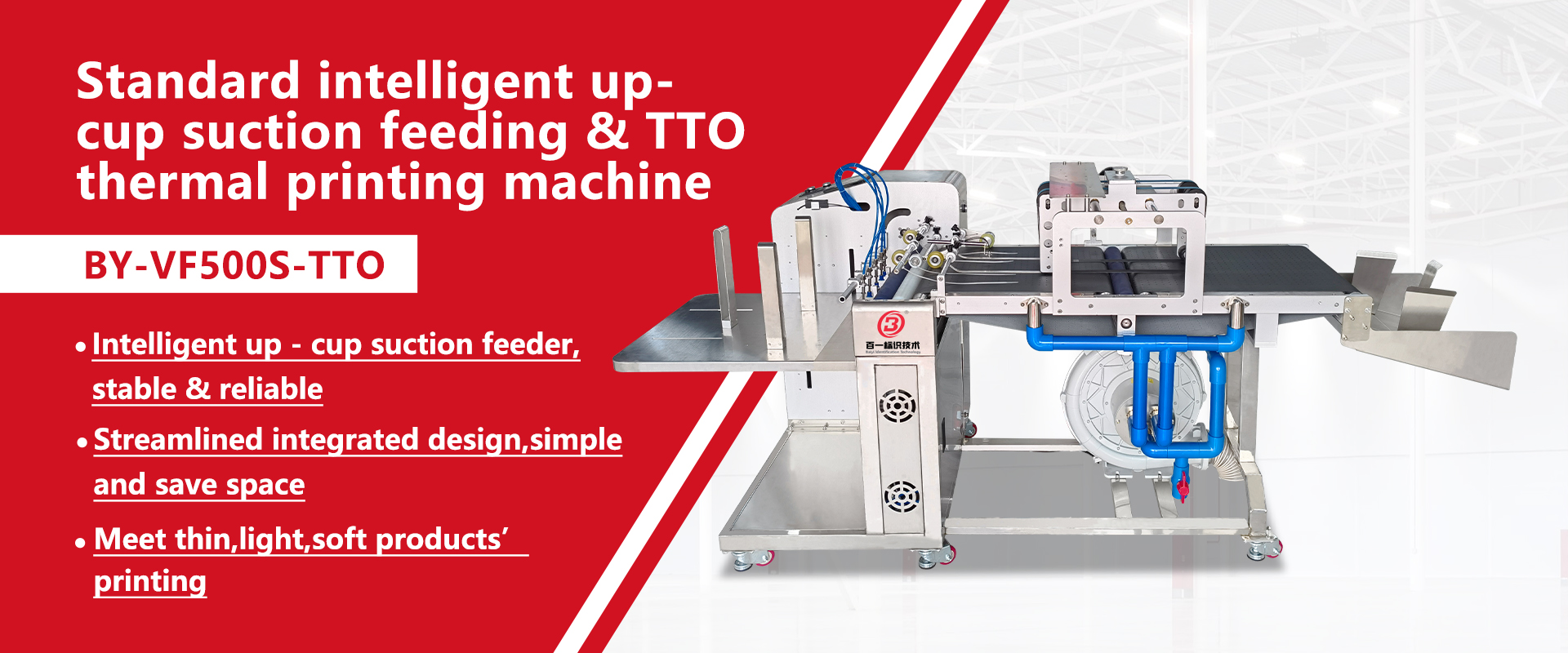
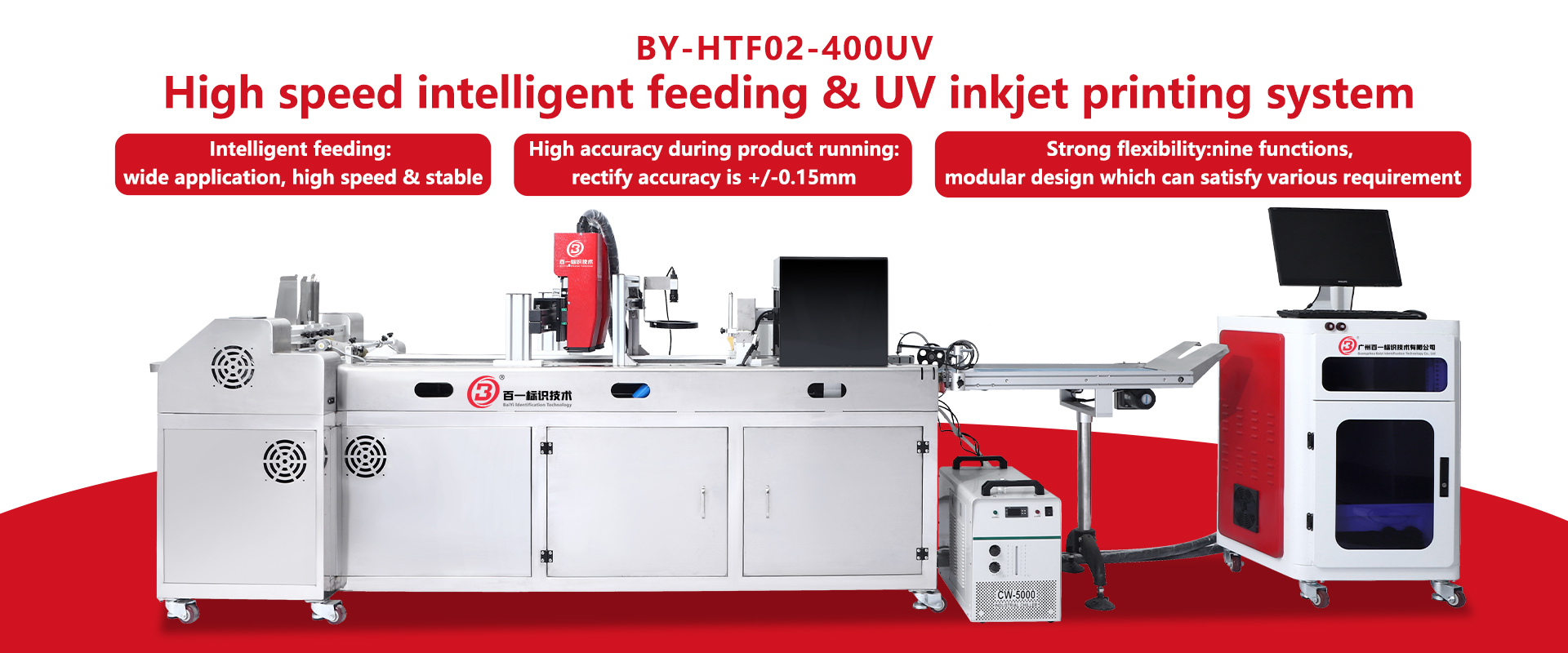
The MarketsandMarkets Industrial Automation Market Report highlights the growing demand for compact, connected, and flexible equipment that can improve productivity while reducing reliance on manual operations. The standard intelligent feeder responds to this trend with a lightweight design, accurate delivery, simple installation, and an open communication port for integration with existing packaging and production lines. Available models include BY-HFT250, BY-MFJ3000-06, BY-MFJ6000-07, and BY-MFJ6000-06, supporting automated feeding of cards, labels, books, folded paper, tissue-style paper, and other paper products.
Designed for intelligent material handling, the machine uses HMI and PLC control, allowing operators to set working quantities, feeding intervals, and operating parameters conveniently. A dual-detection system identifies materials and helps prevent double-sheet feeding, while empty-material alarms and automatic stopping functions support stable operation. The feeder can count products, operate according to preset quantities or timing, and start feeding through either self-control or an external trigger. Its networking capability also enables coordinated delivery across existing production lines, with customized configurations available for different material sizes, production speeds, and layout requirements.
It controls how materials enter a production process. Stable feeding supports smoother assembly, inspection, and packaging. Small changes matter.
Vibratory bowl feeders handle fasteners, electrical components, and molded pieces. They provide steady part flow and support quick assembly.
Screw feeders suit powders, granules, and sticky materials. They support measured transfer in food, chemical, and pharmaceutical production.
Belt feeders handle larger volumes and heavier materials. They are common in mining, aggregate, and recycling operations.
Factory tests can look impressive. Humid material may later reduce output or cause bridging. Short trials reveal actual behavior.
Compare feed accuracy, hopper capacity, noise, cleaning access, and operating hours. Also review drawings, trial reports, warranty terms, and installation support.
Servo drives regulate speed and stroke. Sensors confirm part presence. Programmable controls can adjust gates, conveyors, and robotic pick points quickly.
Vibration, motor temperature, and current sensors can reveal wear early. Still, connectivity does not fix poor tuning or dust buildup.
Steep hopper angles can restrict flow. Poor vibration isolation may create noise and unstable feeding. Operators sometimes miss simple chute misalignment.
Not always. A cheaper machine may require more maintenance, weaker documentation, or slower technical support. Total cost deserves careful review.
This article provides a practical overview of feeding machines, explaining how they accurately transfer, measure, orient, and continuously supply materials throughout industrial production lines. It introduces major feeding machine types, including vibratory, screw, belt, rotary, and loss-in-weight systems, while outlining their applications in food processing, pharmaceuticals, chemicals, plastics, packaging, and general manufacturing. Readers will also learn how to evaluate Feeding Machine Series China manufacturers by examining engineering capability, material compatibility, feeding accuracy, automation features, production capacity, safety design, customization options, and after-sales support.
The article further summarizes ten representative manufacturer categories and the technologies shaping modern feeding systems, such as sensors, programmable controls, servo drives, weighing modules, dust-management structures, and remote monitoring. It concludes with practical guidance on equipment selection, factory layout, installation, commissioning, routine cleaning, spare parts, calibration, and preventive maintenance, helping buyers achieve stable operation, consistent output, and long-term production efficiency.